From Concept to Completion: How AI Can Enhance Your Design Workflow
Interior design projects often involve numerous stages—from initial concept sketches to final execution. The design process can be complex, time-consuming, and prone to errors. Artificial Intelligence (AI) is revolutionizing this workflow, making it more efficient, accurate, and creative. IDF (Interior Designing Firm) harnesses AI to transform interior design workflows, enabling designers and homeowners to bring ideas to life seamlessly.
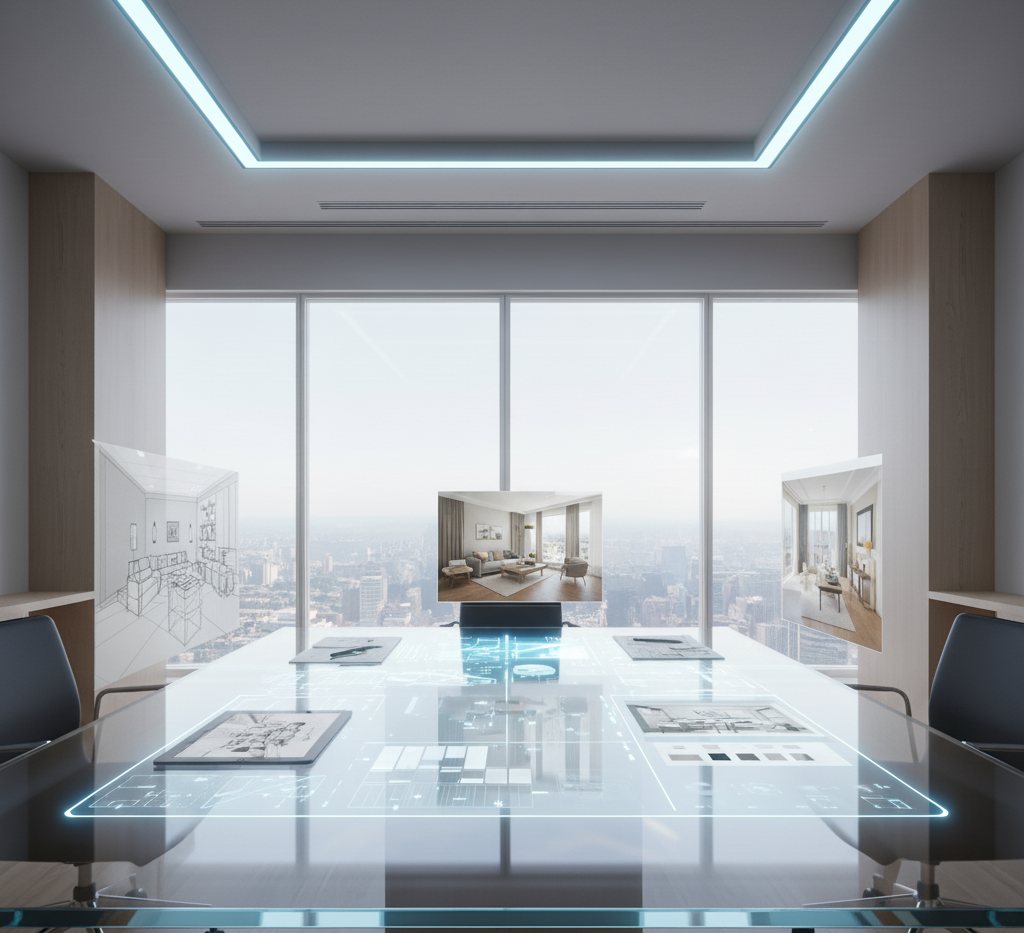
The concept phase is crucial as it sets the vision for the entire project. AI assists designers by analyzing trends, client preferences, and spatial constraints to generate multiple concept options quickly. Instead of spending hours manually sketching, designers can use AI-powered tools to visualize various layouts, color palettes, and design styles in minutes.
Homeowners can also participate in this phase by exploring AI-generated concepts and selecting options that align with their tastes. This collaborative approach reduces miscommunication and ensures the project starts with a clear, client-approved direction.
Once the concept is approved, AI helps optimize the planning phase. It evaluates room dimensions, furniture sizes, and spatial flow to create accurate floor plans. AI ensures efficient utilization of space and highlights potential issues before they arise.
For complex layouts or multi-room projects, AI can simulate traffic flow, ergonomics, and lighting effects, providing designers and homeowners with a comprehensive understanding of how the space will function in reality.
Selecting materials, finishes, and furniture can be overwhelming. AI streamlines this by suggesting suitable options based on style, budget, and sustainability criteria. Designers can explore multiple combinations quickly, while homeowners gain a clear visual representation of choices before purchasing.
This automation reduces decision fatigue, accelerates the procurement process, and ensures design consistency throughout the project.
3D visualization is essential for understanding how a design will look in reality. AI-powered rendering tools create photorealistic 3D models, allowing designers and homeowners to preview textures, lighting, and furniture placements. This realistic representation helps identify adjustments early, preventing costly errors during implementation.
AI can also generate multiple design variations, enabling experimentation with different styles, color schemes, and layouts without additional manual effort.
AI improves collaboration by providing a centralized platform where designers, contractors, and homeowners can communicate and share updates. Automated notifications, progress tracking, and task assignments ensure everyone stays aligned and projects move forward smoothly.
This integrated communication reduces errors caused by misinterpretation, fosters transparency, and accelerates project completion.
AI minimizes errors by analyzing measurements, layouts, and material specifications. It can detect potential conflicts, such as furniture overlapping or insufficient clearance, and suggest corrections automatically. This precision enhances overall quality, reduces rework, and ensures that the final result matches the design intent.
By automating repetitive tasks, optimizing layouts, and predicting potential issues, AI significantly reduces project timelines and costs. Designers can handle more projects simultaneously, and homeowners benefit from faster completion without compromising quality.
AI doesn't replace creativity—it amplifies it. By analyzing design trends and client preferences, AI suggests innovative ideas that inspire unique solutions. Designers can experiment with styles, colors, and layouts to achieve distinctive interiors that resonate with homeowners.
AI trend analysis ensures that designs remain modern, relevant, and aesthetically appealing.
AI enables hyper-personalization by learning the homeowner’s lifestyle, preferences, and functional requirements. The design recommendations reflect individual needs, ensuring a space that is practical, comfortable, and visually appealing. Homeowners can actively shape their interiors in collaboration with designers, resulting in a truly bespoke design experience.
Efficiency:
Streamlines every stage of the design process, reducing manual workload.Precision:
Minimizes errors in layout, measurements, and furniture placement.Cost Savings:
Reduces unnecessary expenses by preventing mistakes and optimizing resources.Creativity:
Offers trend insights and design suggestions for innovative interiors.Personalization:
Delivers designs tailored to client preferences and lifestyle.Collaboration:
Improves communication among designers, contractors, and homeowners.Time Management:
Accelerates project timelines and enhances workflow productivity.
AI is revolutionizing interior design workflows from concept to completion. IDF's AI-powered tools empower designers and homeowners to create spaces that are efficient, precise, personalized, and creative. By integrating AI into every stage of the design process, interiors are delivered faster, with fewer errors, and with maximum satisfaction.
Whether you are a professional designer managing multiple projects or a homeowner seeking the perfect personalized space, AI enables a seamless, intelligent, and inspiring design journey. Embrace AI in interior design and experience a smarter, faster, and more creative workflow with IDF.